Know More About Your Health
TRY SEARCHING WITH A DIFFERENT KEYWORD
Results Found
What is PCOS ?
Polycystic Ovary Syndrome (PCOS, also known as PCOD) is a medical condition that causes hormonal imbalance in women. PCOS or PCOD will make your body secrete more male hormones (androgen) than usual. This excess secretion will enlarge your ovaries
Polycystic Ovary Syndrome (PCOS, also known as PCOD) is a medical condition that causes hormonal imbalance in women. PCOS or PCOD will make your body secrete more male hormones (androgen) than usual. This excess secretion will enlarge your ovaries
Read More..
3 min
What is PCOS Polycystic Ovary Syndrome (PCOS, also known as PCOD)
is a medical condition that causes hormonal imbalance in women.
PCOS or PCOD will make your body secrete more male hormones
(androgen) than usual. This excess secretion will enlarge your
ovaries, making you develop small cysts (fluid-filled sacs) on the
outer edges of your ovaries and, you will experience
irregularities in your menstrual cycles and infertility. PCOS
affects women during their childbearing years, which is
approximately between 12 to 45 years. Studies show that around
26.7% of women in this age group have PCOS, so if you fall under
this age group, keep reading. If you are above 45 years of age or
transitioning into menopause, this would still be relevant, as
PCOS doesn't go away when menstruation does. [READ MORE: DOES PCOS
GO AWAY AFTER MENOPAUSE?] Even before getting an ultrasound or
pelvic exam, you can detect PCOS through its symptoms like
irregular periods and excessive body hair. You must identify these
symptoms early on and start your treatment towards the reversal of
PCOS because, at a later stage, PCOS can contribute to long-term
health problems such as type 2 diabetes, heart-related diseases,
and uterine cancer. [READ MORE: DOES PCOS GETS WORSE WITH AGE?]
What causes PCOS? The precise cause for PCOS remains unknown but
Doctors say that there are a few factors that can lead you to
develop PCOS. Insulin resistance – Insulin resistance is a
condition where your cells stop responding to Insulin. When this
happens, your body stops converting food into energy and, your
Pancreas will start to produce an excess amount of Insulin. This
will result in increase of Androgen levels and will cause
complications in your menstrual cycle. Heredity – Research
suggests that certain genes might be linked to PCOS and, you can
inherit it from your female family members. High level of
inflammation – Inflammation is a process by which your White blood
cells fights against diseases. A high level of inflammation
stimulates the creation of cysts in your ovaries and leads to the
development of PCOS [READ MORE: WHAT IS THE MAIN CAUSE OF PCOS?]
How do you know if you have PCOS? PCOS manifests itself through
syndromes or groups of symptoms in your body. You obviously cannot
do an ultrasound or a pelvic exam at home but there are other ways
through which you can initially self-diagnose PCOS. The more
visible and easily detectable symptoms of PCOS are: ➢ Irregular
menstrual cycle ➢ Infertility ➢ Excess growth of facial hair and
hair loss ➢ Weight gain [READ MORE: WHAT ARE THE SYMPTOMS OF
PCOS?] Do you have an irregular menstrual cycle due to PCOS? The
increase in Androgen levels and the formation of cysts at the
entrance of your ovaries contribute to the irregularities in your
menstrual cycle. Your period might be either too short or too long
with an excessive amount of bleeding. In some cases, you might
have less than 8 periods per year. [READ MORE: WHAT DOES YOUR
PERIOD TELL ABOUT PCOS?] Are PCOS and complications in getting
pregnant linked? The cysts formed in your ovaries will obstruct
the development and release of eggs. This will result in the
production of unhealthy eggs, hindering the seamless release of
eggs from your ovaries. These factors disrupt the fertilization of
your egg by a sperm and will result in infertility and
miscarriage. [READ MORE: 18. PCOS AND PREGNANCY – CAN YOU GET
PREGNANT IF YOU HAVE PCOS?] Can PCOS cause excessive facial hair
and hair loss? PCOS stimulates your hair follicles and makes you
develop a male pattern of hair growth. You might notice denser and
darker hair growth in places like, • Upper lip • Neck • Chest •
Lower abdomen In addition, you will have higher hair loss in your
scalp than usual (more than 100 – 250 strands per day) [READ MORE:
PCOS AND FACIAL HAIR: HOW TO MANAGE PCOS FACIAL HAIR GROWTH?] Does
PCOS lead to obesity? When you have PCOS, your body converts food
into fat and so, you will start to gain weight over time. You
might notice more weight gain in your abdomen than in other parts
of the body. [READ MORE IN DOES PCOS GIVE YOU A BIG BELLY?] Why
should you worry about PCOS? The hormone imbalance caused due to
PCOS will affect tissues throughout your body and you have a
higher chance of developing the following serious health
conditions. Type 2 Diabetes – With PCOS, you will have decreased
sensitivity to insulin and you will have a higher risk of getting
type 2 diabetes. Metabolic syndrome – PCOS can lead to a group of
conditions including high blood pressure, high blood sugar level,
low good cholesterol, and high bad cholesterol. All of these
conditions together will increase the risk of cardiovascular
disease and stroke. Endometrial cancer – During your periods, the
lining in your uterus sheds but PCOS messes with your ovulation
and the lining starts to build up. This thickened uterine lining
will cause Endometrial/Uterine cancer. Non-alcoholic fatty liver
disease – The increase of fat due to insulin resistance will lead
to the accumulation of fat in your liver, which can cause serious
damage to your liver. Can you reverse PCOS? The good news is YES!
By modifying certain aspects of your lifestyle, you can balance
your hormone levels and reduce the risk of developing serious
health issues. The four aspects of your lifestyle that you need to
work on are, ● Nutritious diet ● Exercise ● Meditation ● Sleep
[READ MORE: CAN I REVERSE PCOS?] Will nutritious diet help with
PCOS? A nourishing diet will go a long way in regulating your
hormones, Blood sugar levels and assist in weight loss. Planning
your everyday meals with a balanced diet is very difficult. This
is where Lori comes in handy! Lori is a diet planning app, which
gives you personalized nutritious diet plans every day based on
your physique and your clinical concerns so, join us today in the
reversal of PCOS. [READ MORE: PCOS DIET - TOP 5 THINGS TO AVOID]
How can exercise help with PCOS? To reduce the insulin level of
your body, you need to lose excess weight and do physical
activity. By doing so, you will slowly bring your insulin levels
back to normal and eventually reverse PCOS. [READ MORE: PCOS
WORKOUT – 5 THINGS TO DO] Can meditation and adequate sleep help
with PCOS? Stress and an unhealthy sleep schedule are some of the
leading factors to hormonal imbalance in your body. Practicing
meditation and having adequate sleep will help reduce stress and
ensure the proper functioning of your body and will help rectify
PCOS issues within your body. [READ MORE: I AM HAVING TROUBLE
SLEEPING. DOES PCOS GIVE YOU SLEEP ISSUES?] Lori helps you to
manage and reverse your PCOS by recommending the appropriate
nutrition for you based on your lifestyle and health conditions.
You can even track your menstrual cycle and your hormone levels on
the app. DOWNLOAD THE APP for free for your personalized health
solution! References [1] March, Wendy A et al. “The prevalence of
polycystic ovary syndrome in a community sample assessed under
contrasting diagnostic criteria.” Human reproduction (Oxford,
England) vol. 25,2 (2010): 544-51. doi:10.1093/humrep/dep399 [2]
Dunaif A. Insulin resistance and the polycystic ovary syndrome:
mechanism and implications for pathogenesis. Endocr Rev. 1997
Dec;18(6):774-800. doi: 10.1210/edrv.18.6.0318. PMID: 9408743. [3]
Ajmal, Nida, et al. “Polycystic Ovary Syndrome (PCOS) and Genetic
Predisposition: A Review Article.” European Journal of Obstetrics
& Gynecology and Reproductive Biology: X, Elsevier, 8 June 2019,
www.sciencedirect.com/science/article/pii/S2590161319300948
What are the Symptoms of PCOS?
Polycystic ovary syndrome (PCOS) is a condition that affects hormone levels in women.Here’s a list of symptoms of PCOS: Irregular menstrual cycle Infertility, Excess growth of facial hair and hair loss, Weight gain, Acne, Skin darkening, Anxiety.
Polycystic ovary syndrome (PCOS) is a condition that affects hormone levels in women.Here’s a list of symptoms of PCOS: Irregular menstrual cycle Infertility, Excess growth of facial hair and hair loss, Weight gain, Acne, Skin darkening, Anxiety.
Read More..
3 min
What are the Symptoms of PCOS Polycystic ovary syndrome (PCOS) is
a condition that affects hormone levels in women. If you are a
woman between 12 years to 45 years, you should know how to
identify this issue and know when to consult with your physician.
So, here’s a list of symptoms of PCOS: • Irregular menstrual cycle
• Infertility • Excess growth of facial hair and hair loss •
Weight gain • Acne • Skin darkening • Anxiety How is your
menstrual cycle affected by PCOS? With PCOS, your menstrual cycle
goes for a toss. Your periods could be irregular, either too short
or too long! In some cases, you could have an excessive amount of
bleeding too. When you have PCOS, you tend to have higher androgen
levels (male hormones) and, an excessive amount of insulin in your
body. This imbalance creates small cysts in the entrance of your
ovaries and causes irregularities in your menstrual cycle. [READ
MORE: PCOS AND TRACKING YOUR PERIODS: DOES THAT HELP?] How do you
know when you have irregular periods due to PCOS? • In the case of
adolescents, you will experience a delay in getting your first
period • For adults, you will have less than 8 periods in a year •
The duration between your periods will be less than 21days • The
period bleeding could end in less than 2 days. • Extended period
bleeding for more than 5 days. If you identify with any of these
issues, there is a high chance that you might have PCOS, so we
suggest you consult with your physician. [READ MORE: WHAT DOES
YOUR PERIOD TELL ABOUT PCOS] Does PCOS make it harder to get
pregnant? PCOS is known to cause fertility issues in women.
According to experts, almost 35% of cases of infertility are due
to PCOS. Causes of infertility (Shady Groove Fertility, 2008) If
you have PCOS, the hormonal imbalance interferes with the
development and release of eggs from your ovaries. It also creates
multiple fluid-filled sacs (cysts) in your ovaries, hindering your
ovulation process and affects the quality of your egg. If your
ovaries do not release a healthy egg, you will experience
infertility and miscarriage. If this sounds like what you have
been going through, you might want to consult a doctor. In the
meantime, keep in mind that PCOS is reversible and, help and
guidance are available to keep your PCOS symptoms in control!
[READ MORE: IS IT HARD TO BE PREGNANT IF YOU HAVE PCOS?] Does PCOS
cause excessive facial hair and hair loss? PCOS causes an excess
of Androgen, the male hormone which, stimulates your hair
follicles and causes you to develop a male pattern of hair growth.
You might notice hair growing in places like, • Upper lip • Chin •
Neck • Chest • Lower abdomen This excess hair growth will be
thicker and darker than your usual body hairs. If you notice this
unusual hair growth, see them as a sign to consult a doctor. Also,
you may have seen excessive amounts of hair loss in your scalp
(more than 100 -150 strands.) [READ MORE: PCOS AND FACIAL HAIR:
HOW TO MANAGE PCOS FACIAL HAIR GROWTH?] Does PCOS cause weight
gain in the abdominal region? When you have PCOS, insulin
resistance develops, wherein your body won’t use the insulin
present in your body. This causes a fluctuation in your Blood
sugar level and, you become obese. Insulin resistance cycle
Furthermore, your body secretes extra insulin, which increases the
male hormones (Androgen) production in your ovaries, and might
gain more fat in your abdominal area (men usually carry weight in
that area.) Researchers have found that around 85% of women with
PCOS suffer from insulin resistance. The more weight you gain, the
more your other symptoms will start to develop at a quicker pace.
[READ MORE: DOES PCOS GIVE YOU A BIG BELLY?] Do you have PCOS
Acne? PCOS attacks your Pituitary gland, which is responsible for
the regulation of hormones. This hormonal imbalance causes acne in
your face, chest, and upper back. Acne is one of the earliest
symptoms of PCOS and, if you do not exercise caution, it could
lead to the progress of PCOS and increase of other PCOS symptoms
in your body. [READ MORE: PCOS AND ACNE: HOW DO I MANAGE MY PCOS
ACNE?] Is your skin unusually dark in certain areas because of
PCOS? When you have PCOS, you are prone to develop discoloration
(scientifically called Acanthosis nigricans) in certain parts of
your skin. Insulin resistance causes your skin to have patches of
black and purplish velvet textures in your underarm region and
under your breasts too. The same colour and texture will also form
a ring around your neck. No skin treatment can get rid of this
discoloration, and only by addressing the underlying insulin
resistance issue can this be reversed. Does PCOS make you more
anxious? Anxiety is one of the psychological symptoms of PCOS.
Hormonal changes coupled with sudden weight gain and excessive
hair growth in the “unfeminine” places in your body can cause
emotional and mental stress lowering your self-esteem and can have
a significant impact on your overall mood. Studies show that women
with PCOS are 3 times more likely to be diagnosed with anxiety
than women without PCOS. [READ MORE: PCOS AND MENTAL HEALTH: HOW
TO HANDLE STRESS AND ANXIETY?] What are the suggestions to reverse
your PCOS symptoms? If you experience any of these symptoms, don’t
be distressed or disheartened. The good news is that you can
reverse PCOS by having a healthy lifestyle with nutritious food
and physical activity. At Lori, we support you on your journey
towards reversing PCOS. Based on your health and body, the Lori
app provides you with personalized daily nutrition plans. The goal
here is to help your body use insulin effectively and regulate
your blood sugar levels. The menstrual tracker helps track your
menstrual cycle and provides meal suggestions based on this.
Whichever stage of PCOS you are in (irregular periods, looking to
get pregnant, transitioning through menopause), we are here to
help! Let us begin the reversal of your PCOS today! [READ MORE:
CAN YOU REVERSE PCOS?] References: [1] Dennett, Carrie C., and
Judy Simon. “The Role of Polycystic Ovary Syndrome in Reproductive
and Metabolic Health: Overview and Approaches for Treatment.”
Diabetes Spectrum, American Diabetes Association, 1 May 2015,
spectrum.diabetesjournals.org/content/28/2/116. [2] El Hayek,
Samer, et al. “Poly Cystic Ovarian Syndrome: An Updated Overview.”
Frontiers in Physiology, Frontiers Media S.A., 5 Apr. 2016.
www.ncbi.nlm.nih.gov/pmc/articles/PMC4820451/. [3] Zhang, B.,
Zhou, W., Shi, Y. et al. Lifestyle and environmental contributions
to ovulatory dysfunction in women of polycystic ovary syndrome.
BMC Endocr Disord 20, 19 (2020).
https://doi.org/10.1186/s12902-020-0497-6
What is the main cause of PCOS?
Do you know that Researchers, doctors, and health care providers worldwide don't know the precise cause of PCOS? Most believe that several factors such as insulin resistance, hormonal changes, genetics, and environmental factors cause PCOS.
Do you know that Researchers, doctors, and health care providers worldwide don't know the precise cause of PCOS? Most believe that several factors such as insulin resistance, hormonal changes, genetics, and environmental factors cause PCOS.
Read More..
3 min
What is the main cause of PCOS Do you know that Researchers,
doctors, and health care providers worldwide don't know the
precise cause of PCOS? Most believe that several factors such as
insulin resistance, hormonal changes, genetics, inflammation,
lifestyle changes, and environmental factors cause PCOS. How does
Insulin Resistance Cause PCOS? Insulin resistance is caused
majorly by lifestyle factors. As more blood sugar enters the
bloodstream, the pancreas secretes more insulin to push the blood
sugar into the cells. Over time, your cells stop responding to all
that insulin. This condition is insulin resistance. A higher level
of insulin increases the production of androgens (a group of
hormones that play a role in male traits), causing difficulty with
ovulation. Many women with PCOS have insulin resistance. Insulin
resistance leads to weight gain, irregular periods, and even type
2 diabetes if left unchecked. How do Hormonal Changes Cause PCOS?
Due to hormonal imbalance, there will be an increase in male
hormone production (hyperandrogenism). Androgens are called the
“male hormones”, which control the development of male traits in
your body. The ovaries produce high levels of androgens (such as
testosterone). Higher than the normal androgen levels in your body
can affect your ovaries and prevent ovulation and thus, remain a
leading cause of infertility. The hormonal imbalance also
contributes to symptoms, such as irregular periods, male pattern
baldness, excess hair growth, and acne. Apart from Androgens,
imbalance in hormones such as estrogen, cortisol, thyroid hormone
can also cause PCOS. Is PCOS Genetic? Scientists believe that
there is a link between certain genes and PCOS and that the link
is likely to be complex and involves multiple genes. A wide
variety of genes and mechanisms seem to cause PCOS and, so it has
a wide range of symptoms and develops at different ages for women.
Genes trigger a hormone cascade in your body which affects hormone
levels and insulin resistance. PCOS seems to have a connection
with family history and genetics. Hence, it runs in families due
to mutation in one or more genes. It increases the risk for the
family to develop the same metabolic abnormality. How does
Inflammation Cause PCOS? Inflammation occurs when your body’s
natural immune system reacts to a foreign substance in an attempt
to protect your body from an invader. Unfortunately, sometimes
this response is triggered to react to your cells. Without going
all science-y, there is a high correlation between PCOS and
inflammation markers such as oxidative stress, inflammatory
cytokines, white blood cells (lymphocytes and monocytes).
Inflammation makes it harder to lose weight and is associated with
diabetes, insulin resistance and heart disease (common in those
with PCOS). How does Lifestyle Cause PCOS? Leading an unhealthy
lifestyle increases the risk of PCOS. Poor eating habits, lack of
physical activity, gaining too much weight, sleeping disorders,
and high-stress levels are the substantial causes of PCOS. It also
leads to physically and emotionally distressing symptoms. A diet
high in carbohydrates can cause insulin resistance in your body.
It can cause low-grade inflammation, which stimulates the
androgens' production and cysts' creation in your ovaries. It can
also lead to cardiovascular problems. Check out Lori app and get
your personalized nutrition plan today. To manage a healthy
lifestyle, it recommends a healthy eating regime without any
artificial supplementation. Lack of physical activity is a
potential contributing factor to insulin resistance. It leads to a
higher concentration of estrogen in the body which causes weight
gain. Higher than a healthy weight worsens insulin resistance and,
it increases the production of male hormones responsible for PCOS
symptoms. Depression and other mental health disorders can worsen
your PCOS symptoms. It causes reproductive dysfunctions in your
body (e.g., infertility). Lack of quality sleep is associated with
an increased risk of obesity, fatigue, increased hunger, and
insulin resistance. The causes for PCOS/PCOD may be many but there
is a one-step solution for all this. This is where Lori app helps
you. It creates your personalized health plan based on your body’s
requirement. It can assess the root cause of your disorder
(pcos/pcod) by health evaluation and helps you manage PCOS/PCOD.
[READ MORE: CAN YOU REVERSE PCOS?] REFERENCE: "Causes & Symptoms."
Jean Hailes, 26 Sept. 2019,
www.jeanhailes.org.au/health-a-z/pcos/symptoms-causes. "Polycystic
Ovary Syndrome (PCOS) - Diagnosis and Treatment - Mayo Clinic."
Mayo Clinic - Mayo Clinic, 29 Aug. 2017,
www.mayoclinic.org/diseases-conditions/pcos/diagnosis-treatment/drc-20353443.
"Polycystic Ovary Syndrome (PCOS) - Symptoms and Causes." Mayo
Clinic, 29 Aug. 2017,
www.mayoclinic.org/diseases-conditions/pcos/symptoms-causes/syc-20353439.
"Polycystic Ovary Syndrome." Womenshealth.gov, 1 Apr. 2019,
www.womenshealth.gov/a-z-topics/polycystic-ovary-syndrome. "What
Causes PCOS?" Https://www.nichd.nih.gov/,
www.nichd.nih.gov/health/topics/pcos/conditioninfo/causes.
Can you Reverse PCOS ?
Yes, of course. PCOS and PCOD manifest as acne, menstrual irregularities, obesity, male-pattern baldness, weight gain, and fatigue. Reversing the condition can be attempted by balancing the hormone levels and certainly require lifestyle changes.
Yes, of course. PCOS and PCOD manifest as acne, menstrual irregularities, obesity, male-pattern baldness, weight gain, and fatigue. Reversing the condition can be attempted by balancing the hormone levels and certainly require lifestyle changes.
Read More..
3 min
Can you Reverse PCOS Yes, of course. To attempt the reversal of
PCOS and PCOD, you need to know more about them. PCOS and PCOD
manifest as acne, menstrual irregularities, obesity, male-pattern
baldness, facial hair growth, mood swings, weight gain, and
fatigue. Reversing the condition can be attempted by balancing the
hormone levels and certainly require lifestyle changes. Your
efforts to reverse PCOS and PCOD help reduce the risk of
developing health complications in the future. The mantra to
reverse PCOS is a mix of: Eating wisely, being physically active,
sleeping well, and managing your stress to reverse the hormone
imbalances and the symptoms. How to Eat Well if you have PCOS or
PCOD? The first part of the Reverse PCOS/PCOD Mantra is your
nutrition. While there are dime-a-dozen solutions, you have to
find out what works for you. Get a custom solution based on what
your body requires. (This is where Lori helps. Download our app
for free and get your custom nutrition plan today!) Food is your
primary source of nutrients and, hence a nourishing diet helps
regulate your hormones. Consumption of nutritious, natural and
unprocessed food such as fruits, vegetables, grains and legumes
helps regulate your blood sugar levels. Keep a track of your
weight loss, decreased insulin levels, periods to know if your
regime is working. Track these and many more health metrics on the
Lori app. Managing a consistent well-balanced diet might be a task
for most of you. Here is where the Lori app helps you. It helps
manage PCOS and other clinical concerns by recommendations about
what you can eat to manage a healthy lifestyle without any
artificial supplementation. Your health plan is yours, customized
to you, so you can relax about 'what should I eat today?'. Open
the app and check out your recommendations and, if you don’t like
any, you can switch to something you like from the variety of
options. The app also helps you track your health markers such as
weight, hormone levels, blood sugar, insulin and many more. [READ
MORE: PCOS DIET - TOP 5 THINGS TO AVOID] Does Exercise Help to
Reverse PCOS/PCOD? Lack of physical activity and excess body
weight are potential contributing factors to insulin resistance,
according to the National Institute of Diabetes and Digestive and
Kidney Diseases. Be more active and incorporate any physical
activity for a minimum of 30 minutes per day. This helps you
manage the common symptoms of PCOS, such as weight gain and
fatigue. Weight reduction leads to a decrease in glucose
intolerance, which, in turn, leads to improvement in reproductive
and metabolic derangements in PCOS. Exercise training improves the
regularity of menstrual cycles and ovulation. Focus on your
physical activity, frequency, duration, and intensity and make
sure not to overdo it. Include exercise in your daily routine, and
you'll see that your hormone balance is restored naturally. [READ
MORE: PCOS WORKOUT – 5 THINGS TO DO] Can Meditation Help with
PCOS/PCOD? Women with PCOS are more likely to possess reduced
quality of life and anxiety and/or depression symptoms. If you are
constantly under pressure, it disrupts the hormonal/endocrine
system. Avoiding stress is very important to ensure your hormonal
balance. Elevated levels of stress for long periods can be harmful
to your hormones and overall health. Hence you should practice
meditation, yoga or mindfulness to ensure that you stay more in
the present. [READ MORE: PCOS AND MENTAL HEALTH: HOW TO HANDLE
STRESS AND ANXIETY?] Is PCOS/PCOD disturbing your Sleep? Your body
requires at least 7-9 hrs of sleep to function normally. Make sure
you get quality sleep every day to ensure hormonal balance. Sleep
deprivation leads to increased hunger and carbs craving. Leptin or
satiety hormone is suppressed due to lack of sleep. This is why
you feel hunger pangs on the day that you have not slept well.
Regulating sleep helps you achieve good results in the reversal of
PCOS. Fix your sleep issues by focusing on sleep hygiene. If you
are experiencing sleep disturbances, it will most likely be taken
care of by the diet and lifestyle adjustments. Fortunately, you'll
reverse PCOS with the proper combination of diet, exercise, sleep,
and meditation. Put conscious efforts to correct your condition.
Consult with your physician if you have any specific needs. [READ
MORE: I AM HAVING TROUBLE SLEEPING. DOES PCOS GIVE YOU SLEEP
ISSUES?] REFERENCE: Eenfeldt, Andreas. "Can Low Carb and Keto Help
Reverse PCOS? — Diet Doctor." Diet Doctor, 28 Jan. 2021,
www.dietdoctor.com/low-carb/benefits/pcos. Galan, Nicole. "How
Exercise for Women With PCOS Leads to Better Health." Verywell
Health, 22 Oct. 2020,
www.verywellhealth.com/exercise-benefits-for-women-with-pcos-2616351.
"Natural Treatments for PCOS: Evidence-based Methods." Medical and
Health Information, 4 Oct. 2019,
www.medicalnewstoday.com/articles/326560. "How PCOS Can Sometimes
Lead to Sleep Difficulties." Verywell Health, Nov. 2019,
www.verywellhealth.com/pcos-and-sleep-disturbances-2616639.
Khademi, Afsaneh. "The Effect of Exercise in PCOS Women Who
Exercise Regularly." PubMed Central (PMC),
www.ncbi.nlm.nih.gov/pmc/articles/PMC3289164/.
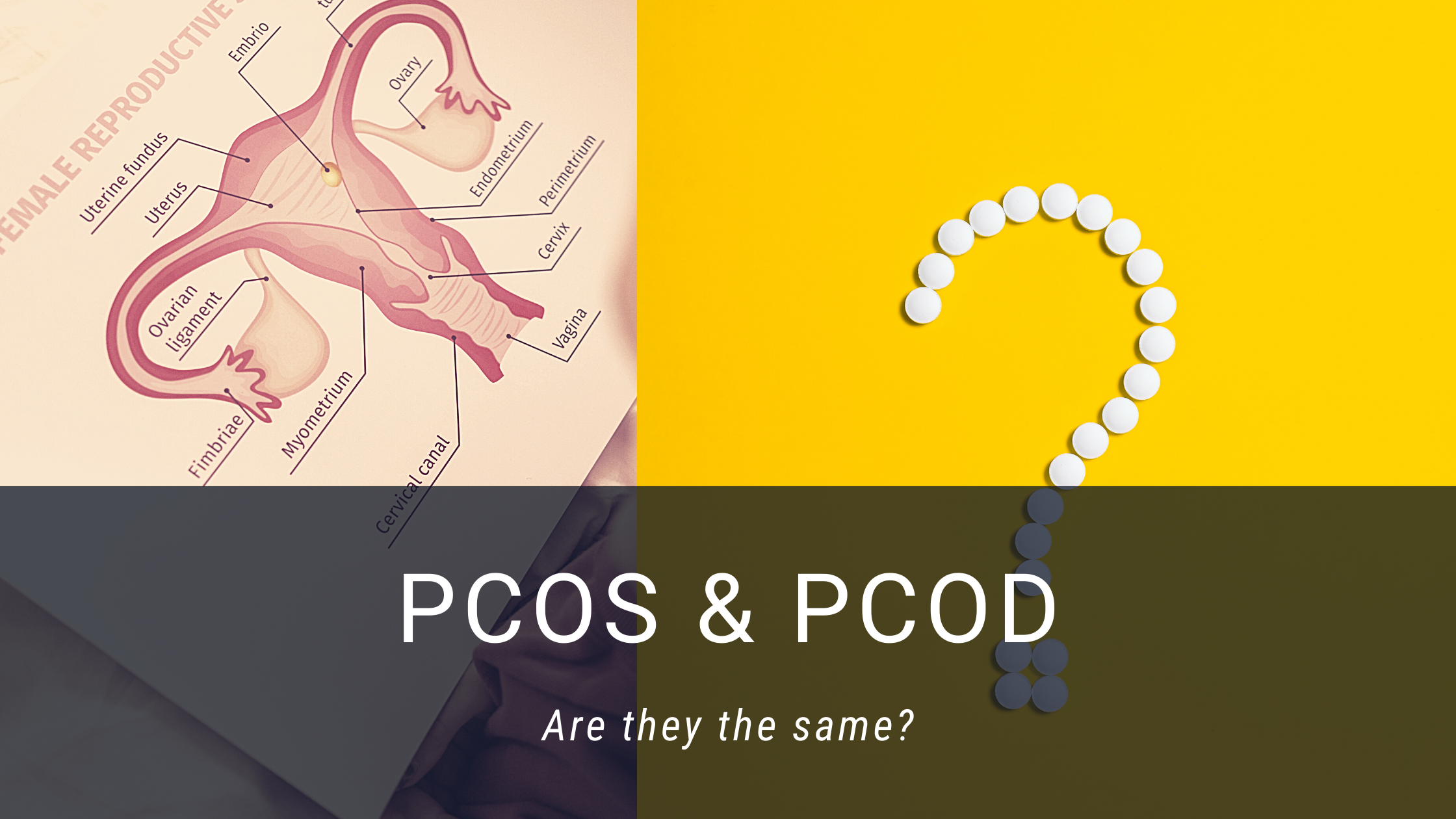
Are PCOS and PCOD the Same?
We use Polycystic Ovary Syndrome (PCOS) and Polycystic Ovary Disease (PCOD) interchangeably, but they actually are not the same. Both are gynaecological problems associated with your ovaries and have similar causes, but they are different.
We use Polycystic Ovary Syndrome (PCOS) and Polycystic Ovary Disease (PCOD) interchangeably, but they actually are not the same. Both are gynaecological problems associated with your ovaries and have similar causes, but they are different.
Read More..
3 min
Are PCOS and PCOD the Same We use Polycystic Ovary Syndrome (PCOS)
and Polycystic Ovary Disease (PCOD) interchangeably, but they
actually are not the same. Both are gynaecological problems
associated with your ovaries and have similar causes, but they are
different. But there are many differences between the two that you
simply must know! Before we go into the sciencey explanation, here
is a little example. The Endocrine system is made up of glands
that make hormones. So if hormones are cars, Endocrine System is
the factory that they are made in. PCOD is a hormonal disorder
(From our example, it is the issue with cars. e.g. brakes, engine
etc.). PCOD is considered temporary as there are higher
possibilities to reverse it (You can go to a repair shop and get
the car fixed). PCOD is more common as compared to PCOS. The
ovaries contain many immature or partially mature eggs, which
eventually become a cyst. These cysts cause more cysts, and so the
cycle goes. It does not cause infertility in all women, and with
medical intervention, the women can conceive successfully. Women
who have PCOD may have similar symptoms as PCOS, but they ovulate
periodically. PCOD can be fixed with lifestyle changes. PCOS is an
endocrinological disorder (From our example, it is an issue with
the factory. e.g. assembly line issues). PCOS is severe (needs a
lot more work to fix this) and has serious complications. In PCOS,
the ovaries produce higher levels of androgen, which interferes
with egg development and release. A number of the eggs become
cysts. These cysts build up within the ovaries and may even get
enlarged during ovulation. For women with PCOS, conception can
become a bit of a challenge. They even have higher rates of
miscarriages. PCOS needs more medical intervention and clinical
supervision. [READ MORE: WHAT IS PCOS?] What are the Causes of
PCOS and PCOD? Though the exact cause is unknown, a lot of factors
contribute to both these conditions. PCOD • Poor eating habits •
Lack of physical activity • Stress • Gaining too much weight •
Excess production of insulin PCOS • High-Stress Level • Hormonal
imbalance • Metabolic disorder • Heredity • Excess production of
androgen and insulin • Presence of low-grade inflammation [READ
MORE: WHAT IS THE MAIN CAUSE OF PCOS?] How to Diagnose PCOS and
PCOD? There is no specific test to diagnose PCOS or PCOD and,
there aren't any universal diagnostic criteria. this is often
because the signs and symptoms for both are quite common. A doctor
would recommend several tests to diagnose a PCOS/PCOD condition.
These tests include physical examination, blood tests, ultrasound,
and pelvic scans. Pelvic/Transvaginal/Abdomen ultrasound: This
ultrasound is the testing process to create an image of the
ovaries to detect the cysts. In PCOS, the ovaries could also be
larger than the usual size and characteristically have 12 or more
follicles per ovary. In PCOD, the ovaries might not appear large
but have follicles (5 to 6 per ovary) that can be relatively
smaller and immature. Often the cysts are lined alongside the
surface of the ovaries. Physical Examination: Your doctor may
conduct a physical examination where he/she may measure your
weight, calculate your BMI, observe abnormal hair growth, hair
loss, increase in acne, etc. Pelvic Examination: The doctor may
conduct a physical examination, where he/she may feel any abnormal
growth within the pelvic area. It is to detect abnormalities
within the ovaries, clitoris, vagina, fallopian tubes, rectum,
cervix etc. Blood Tests: TSH, T3, and T4: The most common test
assigned to the physical symptoms could be a thyroid test. The
TSH, T3, and T4 blood tests calculate the extent of thyroid
hormones in your bloodstream. Hormone Tests (FSH, LH,
Testosterone, Oestrogen, Androgen): Follicle Stimulating Hormone
(FSH) regulates your ability to get pregnant, while LH (LH)
promotes your ovulation. If you've got PCOS, FSH would be less
than the normal level while LH would be higher. [READ MORE: I
THINK I MIGHT HAVE PCOS. WHEN SHOULD I SEE A DOCTOR?] What are the
symptoms of PCOS and PCOD? You can detect PCOS/PCOD before getting
any kind of diagnosis through their symptoms. PCOS Acne Weight
gain and trouble losing weight Extra hair on the face and body
due to excess androgen in your body Thinning hair on the scalp
or hair loss on the scalp; male-pattern baldness Irregular
periods Fertility problem Too much hair on the body where men
usually have hair. this is often called "hirsutism." Skin tags
Darkening of the skin PCOD ● Irregular periods (amenorrhea) ●
Unusual body and facial hair growth (hirsutism) ● Stubborn acne ●
Uncontrolled weight gain around the waist area ● Pigmentation or
darkening of the skin (Acanthosis nigricans) ● Infertility ●
Male-pattern baldness ● Headaches [READ MORE: WHAT ARE THE
SYMPTOMS OF PCOS?] Diagnosing the symptoms early and starting your
treatment on time can prevent you from these long-term health
problems. Go and visit your doctor if you see any of the above
mentioned symptoms. What are the Other Possible Risks with PCOS
and PCOD? PCOS ● Diabetes ● Heart diseases ● Endometrial Cancer ●
Obesity-related conditions ● High blood pressure ● Depression ●
Obstructive sleep apnea ● Liver disease ● Abnormal uterine
bleeding ● Breast cancer ● Metabolic syndrome ● Miscarriage or
premature birth ● Non-alcoholic steatohepatitis PCOD Uncontrolled
PCOD can cause numerous problems like ● Perinatal complications
like gestational diabetes and pre-eclampsia ● Long term risk of
endometrial cancers ● Increased cholesterol levels ● High blood
pressure [READ MORE: WHY ARE MY PCOS SYMPTOMS GETTING WORSE?]
There's no cure for either PCOD or PCOS, but both diseases are
often managed with specific medication and lifestyle changes.
Check out Lori app, it provides tailored health plans to manage
PCOS/PCOD and certain medical conditions that are mentioned under
the possible risks of PCOS/PCOD (such as diabetes, cholesterol,
blood pressure). It helps you track your health metrics. Download
it right away and get access to your personal health management.
[READ MORE: CAN YOU REVERSE PCOS?] REFERENCE: "Polycystic Ovaries
or PCOS – What’s the Difference?" Dr Alex Polyakov, 7 Oct. 2020,
www.dralexpolyakov.com.au/blog/polycystic-ovaries-or-pcos-whats-the-difference/.
Watson, Stephanie. "Polycystic Ovary Syndrome (PCOS): Symptoms,
Causes, and Treatment." Healthline,
www.healthline.com/health/polycystic-ovary-disease. "Polycystic
Ovary Syndrome (PCOS) - Diagnosis and Treatment - Mayo Clinic."
Mayo Clinic - Mayo Clinic, 29 Aug. 2017,
www.mayoclinic.org/diseases-conditions/pcos/diagnosis-treatment/drc-20353443.
Do I have to lose weight to reverse PCOS/PCOD?
The answer is YES! Weight loss can significantly help you in reversing PCOS. PCOS is a hormone imbalance syndrome, which increases the Male hormone and insulin levels in your body.It can lead to long-term health issues such as cancer.
The answer is YES! Weight loss can significantly help you in reversing PCOS. PCOS is a hormone imbalance syndrome, which increases the Male hormone and insulin levels in your body.It can lead to long-term health issues such as cancer.
Read More..
3 min
lose weight to reverse pcos Do I have to lose weight to reverse
PCOS/PCOD? The answer is YES! Weight loss can significantly help you in reversing PCOS. PCOS is a hormone imbalance syndrome, which increases the Male hormone and insulin levels in your body.It can lead to long-term health issues such as cancer.